
Notice the sole is not formed to the foot as is the medieval example at the bottom.
There are two main types of viking shoe. The first and most common is by thonging around the top of the shoe. This can be seen in the Jorvik II on the far right.

The Jorvik I type is closed by a flap crossing over and closing with a button.
The Heddeby shoe is an early type of turn shoe. This is the least common type found, but could be less costly, but less protective. Any of these types could be worn by our modern Hersir.
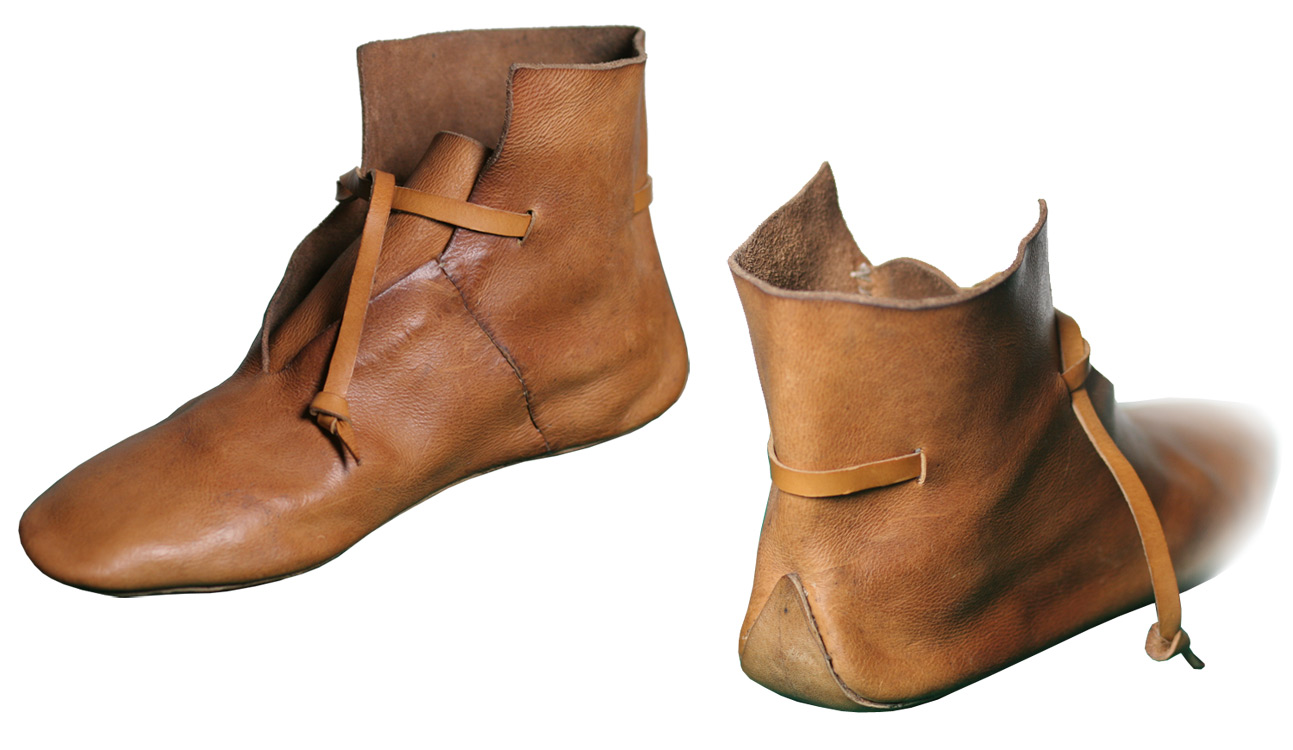
A pair of shoes from Medievaldesign.com.
It is always easy to do the wrong thing. If you take the time and effort you will recreate a true vision of the Hersir.
This looks cool, but it's not history:


No comments:
Post a Comment